

The Susan B. Anthony dollar coin was designed to replace the dollar bill.
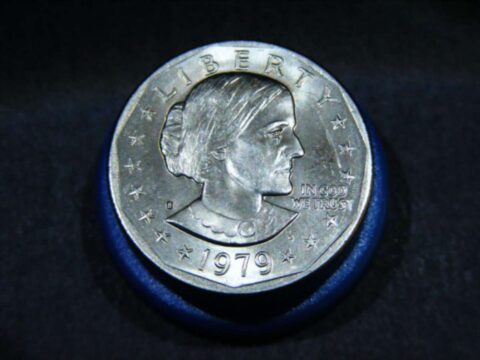
Have you ever used Susan B. Anthony dollar coins to pay for anything?
Probably not. And if you did, you were likely one of the countless people who didn’t like using the dollar coin!
The Susan B. Anthony dollar was an unfortunate failure nearly from the moment it hit pocket change back in 1979.
In 1980, a smaller number of Susan B. Anthony dollar coins was minted for circulation. In 1981 only a tiny number was made for coin collectors. It wasn’t until 1999 that the SBA dollar was resurrected — because, by that time, the demand was rapidly growing for dollar coins in the vending machine industry and in the mass transit sector as well.
Today, I want to do more than simply discuss mintage numbers and coin values.
Let’s talk about why the Susan B. Anthony dollar coin is so fun to collect…
The Susan B. Anthony Dollar Coin Gets No Respect
The late, great comedian Rodney Dangerfield said it best when he lamented he got no respect. His words probably suit the SBA dollar coin, too.
The poor Susan B. Anthony dollar, struck from 1979-1981 and also in 1999, is one of our nation’s shortest-lived coins. It also could probably qualify for being one of our least popular coins, too.
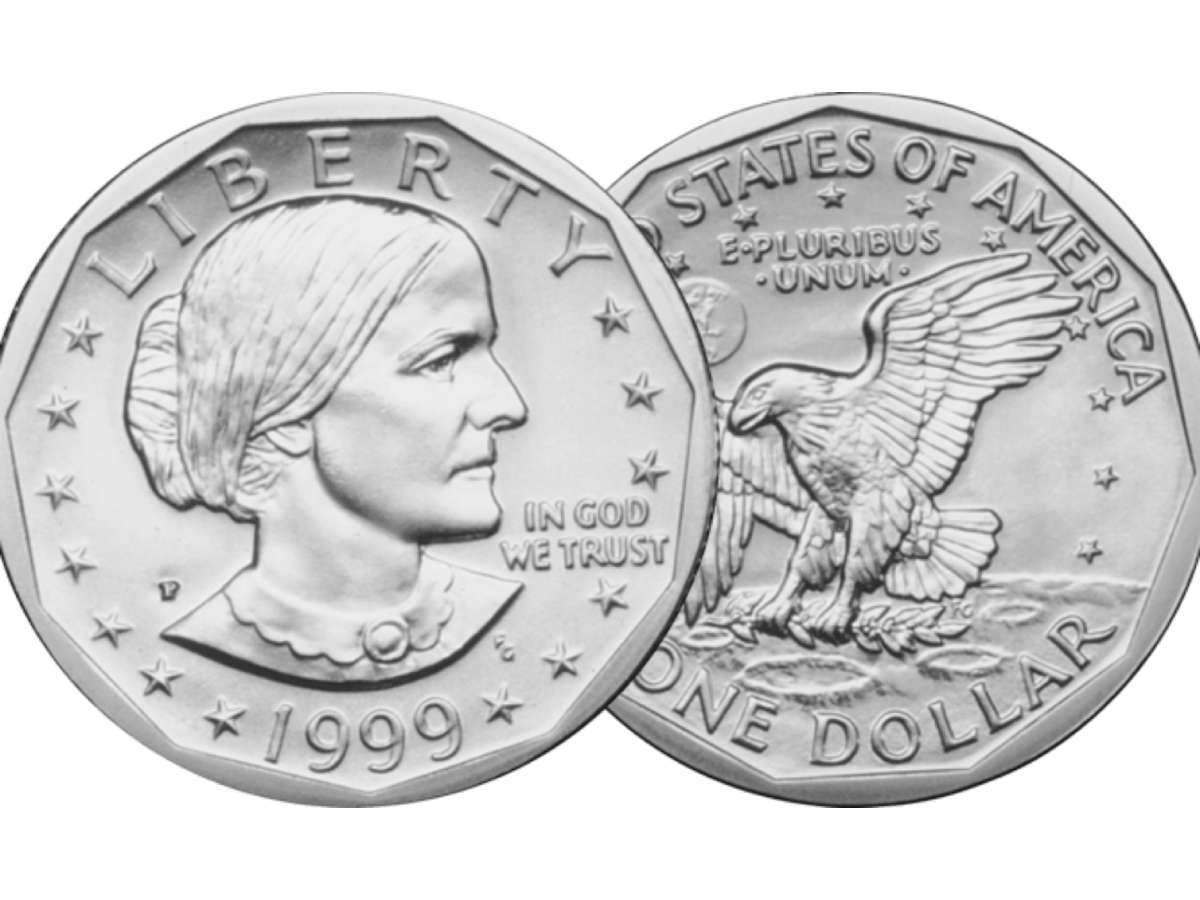
Perhaps the biggest complaints about the coin came from those who lost 75 cents each time they confused the Susan B. Anthony dollar coin with the quarter (because they look so similar and are about the same size).
The problem people had with the Susan B Anthony coin is that they:
- Confused it with the quarter dollar, which is only a tad smaller
- Refused to use Susan B. Dollar dollar coins because the dollar bill was still circulating
- Didn’t like carrying around dollar coins, which weigh more than paper currency of equal face value
It goes without saying that it is an insult to call the Susan B. Anthony dollar coin the Carter Quarter. This is a direct reference to Jimmy Carter’s signing into the law the bill which authorized striking the about-quarter-sized coin.
Susan B. Anthony Coin Parodies
The SBA dollar coin has been both celebrated — and parodied.
Here are some excerpts from WikiPedia:
On [an] episode of “The Simpsons,” [entitled] “Mr. Lisa Goes to Washington,” Lisa proposes that the family attend the memorial to the fictional Winifred Beecher Howe, an ‘early crusader for women’s rights’ who was the leader of the 1910 Floor Mop Rebellion. ‘Later,’ Lisa notes, ‘she appeared on the highly unpopular 75-cent piece.’
The song Sunken Waltz by musical group Calexico features the lyric ‘Tossed a Susan B. over my shoulder and prayed it would rain and rain.’
The TV series based on the “Robocop” movie, which was set in the near future, featured a $1 coin called the ‘Ronnie.’ It was nearly identical to the Susan B. Anthony dollar, except that its obverse depicted Ronald Reagan.
And there are many more references to the Susan B. Anthony dollar coin in pop culture, as you will find.
The Rarest Susan B. Anthony Dollar Coins
It’s fair to say there really is no such thing as a truly rare Susan B. Anthony dollar. But if you’re on the lookout for SBAs in circulation, there is one year you will probably have a fairly hard time finding: 1981.
Why? Because in the 4 years the coin was struck (1979, 1980, 1981, and 1999), 1981 is the only year the U.S. Mint did not strike any Susan B. Anthony dollars for circulation.
All 1981 dollar coins were included only in mint-produced sets. However, there are collectors who have entered 1981 dollars in circulation. Therefore, it is possible to find a 1981 Susan B. Anthony dollar in change — but good luck.
By far, the most common date for the Susan B. Anthony dollar is 1979 — the year more than 750 million strikes of the coin were made.
For comparison’s sake, a tad more than 140 million were made for all other dates combined. Of all the Susan B. Anthony dollars ever made, only 9,742,000 regular-strike coins were dated 1981.
Susan B. Anthony Coin Values
One of the most enjoyable things about the SBA dollar is how relatively easy and inexpensive it is to assemble a complete collection of Susan B. Anthony dollar coins.
Including proofs and varieties, there are in total just 18 different Susan B. Anthony dollars to collect:
Susan B. Anthony Dollar Coin Values
| Year | Mint Mark & Variety/Type | Value* |
| 1979 | P (Narrow Rim) | $2.50 |
| 1979 | P (Wide Rim) | $30 |
| 1979 | D | $2.50 |
| 1979 | S | $2.50 |
| 1979 | S (Type 1 Proof) | $4 |
| 1979 | S (Type 2 Proof) | $35 |
| 1980 | P | $2.50 |
| 1980 | D | $2.50 |
| 1980 | S | $2.50 |
| 1980 | S (Proof) | $4 |
| 1981 | P | $3 |
| 1981 | D | $3 |
| 1981 | S | $3 |
| 1981 | S (Type 1 Proof) | $4 |
| 1981 | S (Type 2 Proof) | $120 |
| 1999 | P | $3 |
| 1999 | D | $3 |
| 1999 | P (Proof) | $15 |
*Values are for coins in uncirculated condition, unless otherwise noted as proofs.


