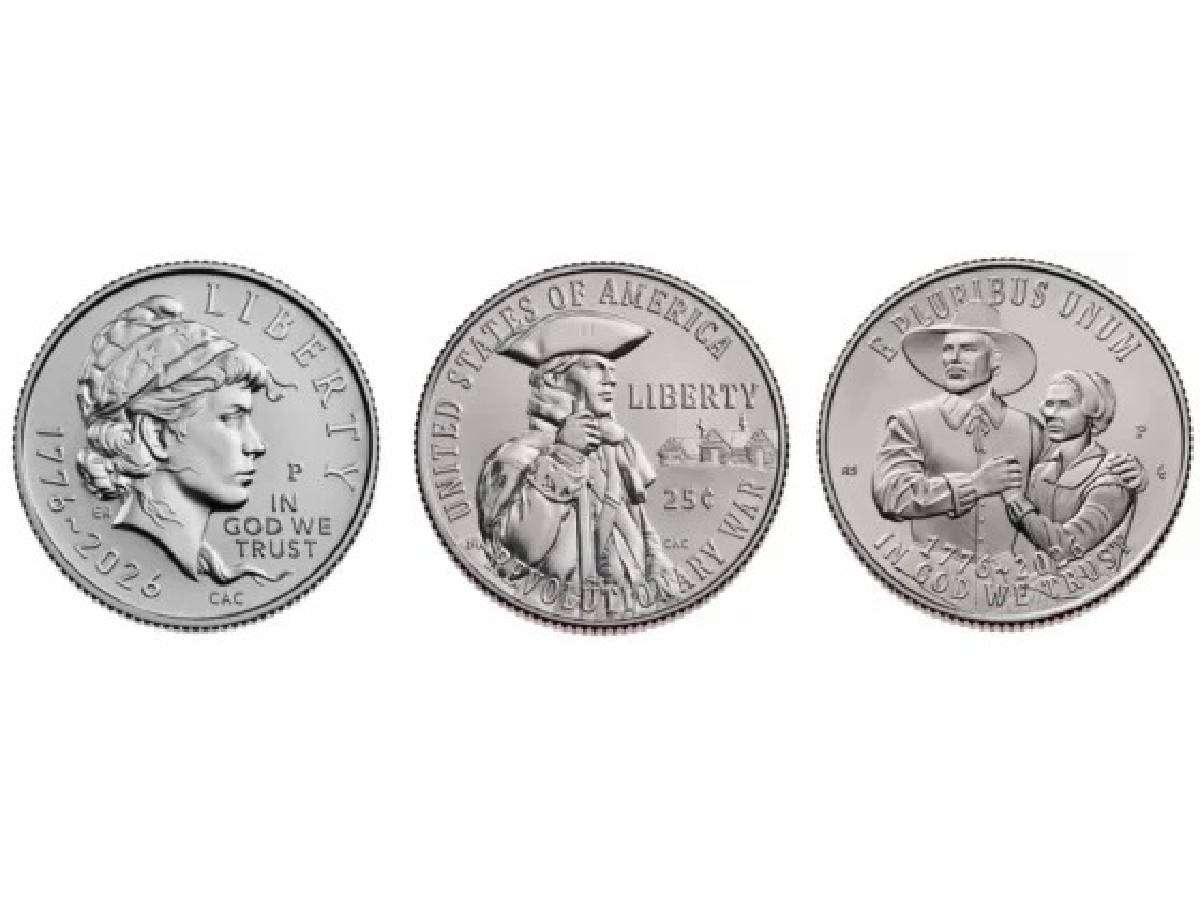
There’s controversy brewing around the 2026 semiquincentennial coins released by the United States Mint.
The coins, which include a 2026 penny, nickel, dime, 5 quarters, and a half dollar, are stirring the pot due to their themes and designs.
Many people are claiming the designs on the 2026 coins don’t correctly represent the nation’s diversity and struggle with obtaining equal rights for women and people of color.
But what makes the situation perhaps more aggravating for the critics is that many of the designs originally recommended for the 2026 coins did.
The new 2026 coins, featuring special obverse (“head’s side”) and reverse (“tail’s side”) design elements, are planned to be released for only one year and also have their many supporters.
So, where do you stand?
A Look At The 2026 Semiquincentennial Coins
Before we get into the details on why the 2026 semiquincentennial coins are so controversial, let’s look at the designs as the United States Mint unveiled them.
Here’s a video the U.S. Mint released in late 2025 where you can see the coins:
Here’s a gallery of the 2026 semiquincentennial coin designs:
2026 Semiquincentennial Penny
The Lincoln penny was discontinued for circulation in 2025. But the cent returns in 2026, though not for circulation — it will be released only in special collector sets. The obverse is anchored by the usual portrait of President Abraham Lincoln as designed and sculpted by Victor David Brenner, but it also features a special 1776~2026 dual date recognizing the nation’s 250th anniversary. The reverse showcases the Union Shield design by Lyndall Bass, which was sculpted by Joseph Menna.

2026 Semiquincentennial Nickel
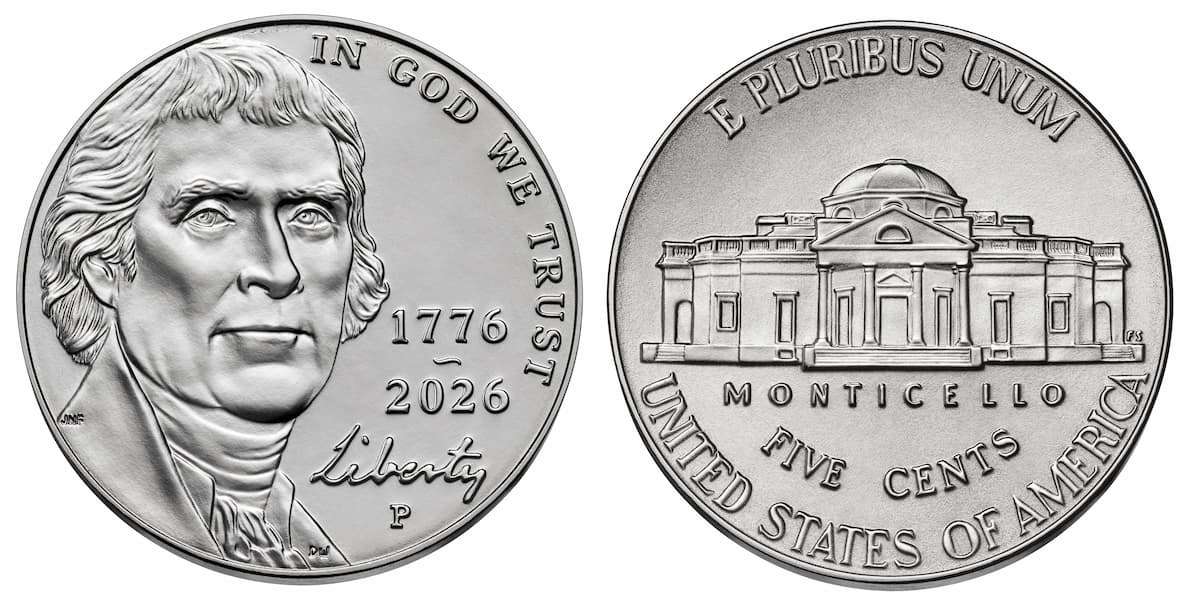
The Jefferson nickel carries its obverse bust of President Thomas Jefferson as designed by Jamie Franki along with 1776~2026 days dating. The reverse depicts Jefferson’s Virginia home known as Monticello, which was designed by Felix Schlag.
2026 Emerging Liberty Semiquincentennial Dime
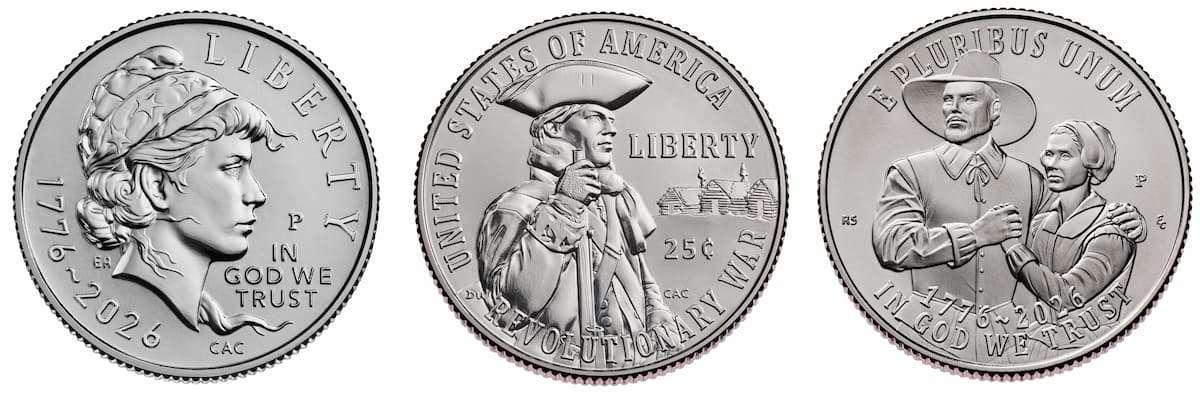
The design of the Emerging Liberty dime shows a determined Liberty, donning a liberty cap symbolic of the Revolutionary War era, staring down the tyranny of the British monarchy. The obverse was designed by U.S. Mint Artistic Infusion Program Designer Esao Andrews and was sculpted by Medallic Artist Craig A. Campbell. The reverse of the coin, with its eagle carrying talons, was designed and sculpted by Medallic Artist Eric David Custer.

2026 Mayflower Compact Semiquincentennial Quarter
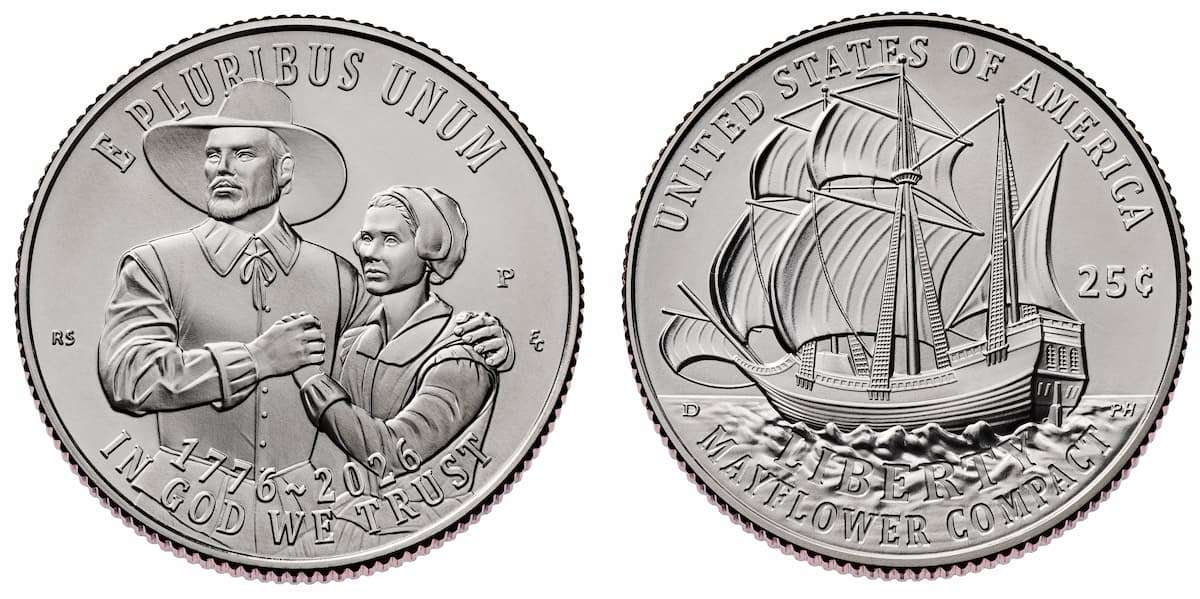
Two Mayflower pilgrims look upon a new frontier near the shores of what became known as Massachusetts, where the Mayflower Compact was signed in 1620. The founding document that served as a precursor to the Declaration of Independence and U.S. Constitution that came along well more than a century later. The obverse was designed by U.S. Mint Artistic Infusion Program Designer Ron Sanders and sculpted by Medallic Artist Eric David Custer. The reverse, designed by the late Cyrus E. Dallin and sculpted by Medallic Artist Phebe Hemphill, depicts the Mayflower, the ship that brought the pilgrims from England to what is commonly referred to as the “New World” in 1620.
2026 Revolutionary War Semiquincentennial Quarter
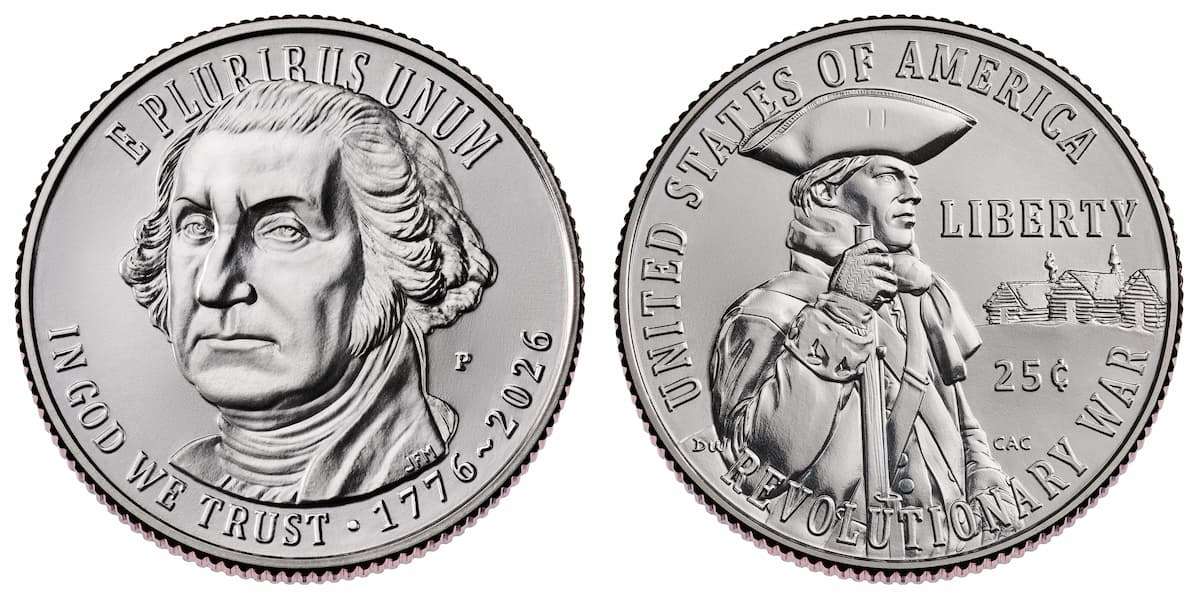
Commander-in-Chief of the Continental Army (and later first United States president) George Washington anchors the obverse of this quarter, which recalls a decidedly bloody chapter in early American history — the fight against the British. Joseph Menna designed and sculpted the obverse, which is paired with a reverse depicting a Continental Army soldier at Valley Forge, Pennsylvania, as imagined by designer U.S. Mint Artistic Infusion Program Designer Donna Weaver and sculpted by Medallic Artist Craig A. Campbell.
2026 Declaration Of Independence Semiquincentennial Quarter
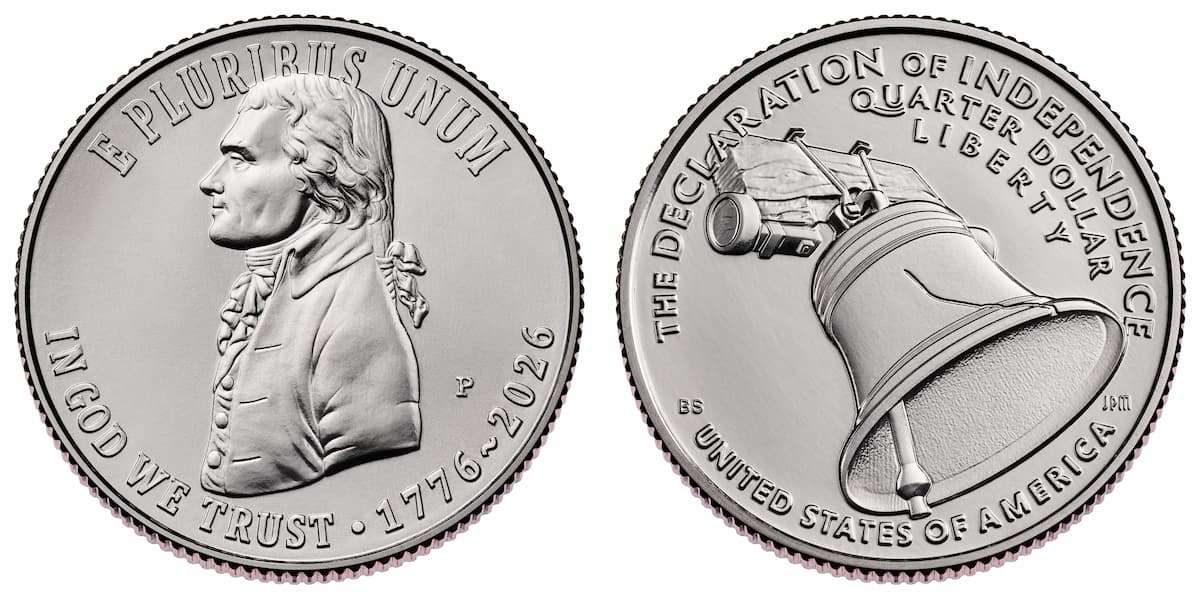
Amid the pangs of the Revolutionary War, America’s foreparents had the courage to draft a document that created a nation unlike any other — one that called for the creation of an independent nation built upon the founding principles of life, liberty, and the pursuit of happiness. The Declaration of Independence was primarily authored by Thomas Jefferson, seen on the obverse as designed by first Chief Engraver of the United States Mint Robert Scot and sculpted by early Mint assistant engraver John Reich. The reverse showcases the Liberty Bell, in motion as it celebratorily rings in a scene envisioned by U.S. Mint Artistic Infusion Program Designer Ben Sowards and sculpted by Medallic Artist John P. McGraw.
2026 U.S. Constitution Semiquincentennial Quarter
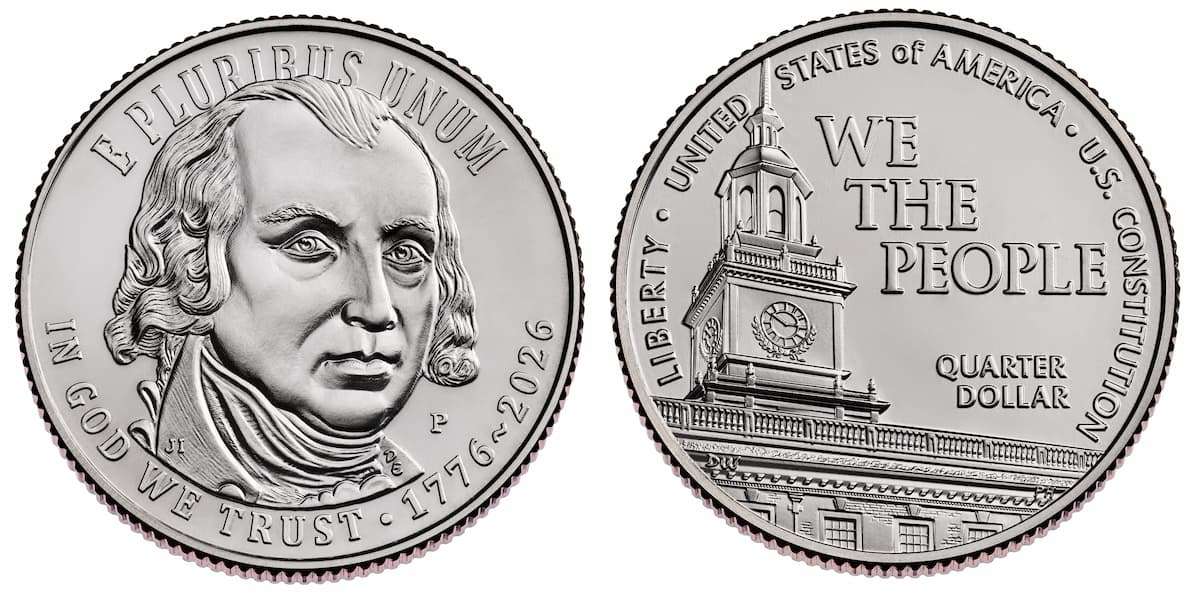
James Madison, who was known as the “Father of the Constitution” and served as the nation’s fourth president, is seen on the obverse of this quarter, designed by U.S. Mint Artistic Infusion Program Designer Joel Iskowitz and sculpted by Medallic Artist Don Everhart. The reverse captures Philadelphia’s Independence Hall, where the United States Constitution was signed and the Liberty Bell lived during its active heyday; the reverse was designed by U.S. Mint Artistic Infusion Program Designer Donna Weaver and sculpted by Medallic Artist Phebe Hemphill.
2026 Gettysburg Address Semiquincentennial Quarter
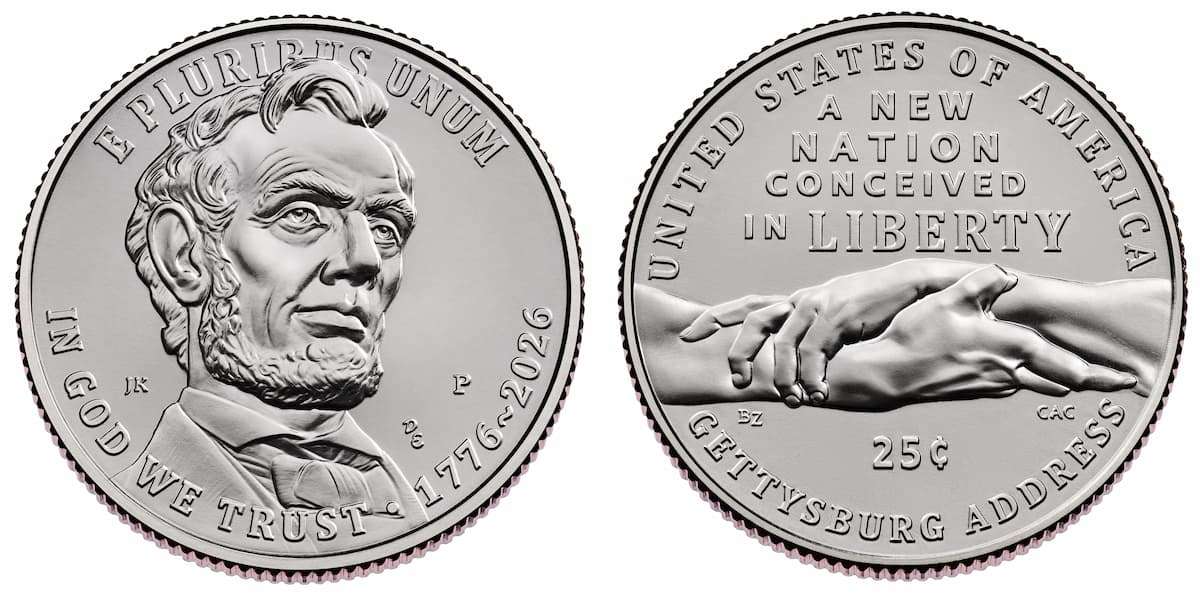
The American experiment nearly failed during the Civil War, which took place from 1861 through 1865 and very nearly tore the nation in two along geographical and ideological lines. President Abraham Lincoln, who said “a house divided against itself cannot stand,” fought for freedom for all — including the nation’s millions of enslaved people. In 1863, Lincoln’s Gettysburg Address served to honor the lives lost in the Civil War while ensuring a “new birth of freedom” and “government of the people, by the people, for the people, shall not perish from the earth.” The obverse of this quarter honors Lincoln with a stately portrait of the 16th president as designed by U.S. Mint Artistic Infusion Program Designer Justin Kunz and sculpted by Medallic Artist Don Everhart; the reverse shows two hands grasping one another in America’s fight for freedom, depicted by U.S. Mint Artistic Infusion Program Designer Beth Zaiken and sculpted by Medallic Artist Craig A. Campbell.
2026 Semiquincentennial Half Dollar
The obverse of this half dollar shows a close-up view of the Statue of Liberty, the iconic New York Harbor landmark, looking outward toward the promise of the future just beyond the horizon. The obverse was designed by U.S. Mint Artistic Infusion Program Designer Donna Weaver and sculpted by Medallic Artist John P. McGraw. The reverse portrays Liberty passing her torch to the next generation, as imagined by U.S. Mint Artistic Infusion Program Designer Beth Zaiken and sculpted by Medallic Artist Darla Jackson.

OK… So What’s The Problem With The 2026 Coin Designs?
Individually, most would probably say nothing… Many of the designs have been hailed as artistic achievements of the type that some would say haven’t been seen on U.S. coins in decades. There has been particular praise for the Emerging Liberty design on the 2026 dime.
The controversies stem not so much from what’s seen in the designs themselves but rather from what isn’t seen in the designs — or across the gamut of the 2026 Semiquincentennial coins.
The Citizens Coinage Advisory Committee (CCAC) had originally suggested these five themes for the 2026 quarters:
- Declaration of Independence
- U.S. Constitution
- Slavery Abolition
- Women’s Suffrage
- Civil Rights
But that’s not what happened. Three of those themes were ultimately scrapped: Slavery Abolition, Women’s Suffrage, and Civil Rights.
They were replaced with themes honoring the Mayflower Compact, Revolutionary War, and the Gettysburg Address.
Of course, the Mayflower Compact, Revolutionary War, and Gettysburg Address are all noteworthy events warranting their own coins. But to usurp the originally planned themes that celebrate diversity, equity, and inclusion while recognizing the advancement of Black abolition, women’s suffrage, and civil rights? That strikes many as whitewashing of American history in a coin program that was supposed to represent America’s diverse and complicated story.
Writes Chris Isidore for CNN, “Rather than the fight against slavery or giving women the vote, the designs primarily honored a more homogeneous view of US history: George Washington for the Revolutionary War, Thomas Jefferson and the Declaration of Independence, James Madison and the Constitution, Abraham Lincoln and the Gettysburg Address, as well as pilgrims to celebrate the Mayflower Compact.”
He concludes, “The new coins, coming after the administration stopped issuing new pennies earlier this year, underscore Trump’s drive to put his own stamp on the presidency far beyond the confines of the White House – whether it’s by putting his own face and name on US institutions or by pulling back on diversity efforts to reframe the story of America itself.”
Who Made The Final Decision On 2026 Coin Designs?
The CCAC, along with the Commission of Fine Arts, reviews designs and makes recommendations to the Secretary of the Treasury on what themes and imagery should appear on United States coins. However, the decision on what actually makes it onto the nation’s coinage is solely up to the discretion of the Secretary of the Treasury. It is Secretary of the Treasury Scott Bessent, appointed by President Donald Trump, who made the decision on the 2026 coin designs. As you might recall, it was Bessent who officially declined to order pennies for circulation in 2025, drawing curtains on the penny.
U.S. Treasurer Brandon Beach, serving under Bessent at the time and overseeing production of physical money (like coins), said this to a FOX News reporter: “The new Semiquincentennial Quarter designs will celebrate American history and the founding of our great nation. While the [President Joe] Biden administration and Secretary [Janet] Yellen remained focused on DEI and Critical Race Theory policies, the Trump administration is dedicated to fostering prosperity and patriotism. We have no doubt these new designs will be wildly popular with the American people.”
Furthermore, United States Mint Acting Director Kristie McNally said in a Mint press release: “The designs on these historic coins depict the story of America’s journey toward a ‘more perfect union,’ and celebrate America’s defining ideals of liberty. We hope to offer each American the opportunity to hold our nation’s storied 250 years of history in the palms of their hands as we Connect America through Coins.”
So, what do you think?
Do you like the 2026 Semiquincentennial coin designs? What are your thoughts on the final design selections and why many of the CCAC-recommended themes and designs were replaced with others?
Sound off in the comments below!