“What’s my coin worth?”
That’s the question to which everyone wants an answer.
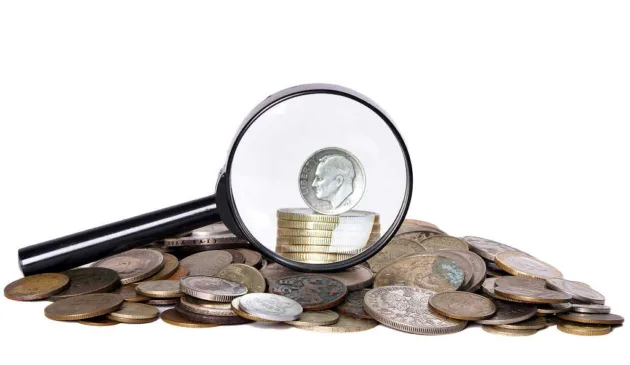
While it may seem like a fairly easy type of inquiry to get a helpful response to, sometimes it can take a really good evaluation of the coin by a professional coin dealer to determine your coin’s value accurately.
You see, when determining the value of a coin, the appraiser must consider not only the date and denomination of the coin, but also what condition it is in, what the value of the metal is, the relative scarcity of the coin, and other issues.
Judging the value of a coin is often a highly sensitive process, and there are very few coins that come with “stock” values.
Therefore, when somebody asks a question like “What is my 1902 Indian penny worth?” it truly is difficult and even unfair to you for anybody to give you an answer without first seeing it in person for a true, accurate appraisal.
While accurate price quotes are essentially impossible without physically inspecting the coin in person, it is possible to decide what value range your coin may fall into — based on some basic average prices often realized in the everyday coin market.
First, Determine The “Grade” Of Your Coin
The best way to find out if your coins are valuable is to purchase a good coin pricing book — like A Guide Book of United States Coins, by R.S. Yeoman and Kenneth Bressett.
This Whitman Publications book (widely referred to as The Red Book) is updated annually and contains average pricing information for all U.S. coins dating back to the Colonial era. I like it because in addition to listing coin values, it also offers basic coin grading information to help you determine the condition of your coin.
You could also buy one of the several coin magazines with pricing guides. Coins Magazine and COINage Magazine are 2 popular periodicals that have some pricing charts, as well as many informative articles pertaining to coins, coin values, and coin news.
If you want to keep your coin value hunting to the Internet, I recommend perusing websites that offer coin grading advice.
These are the best coin grading apps that make it easy to find the grade of a coin.
Next, Find A Reputable Coin Dealer
Once you get some ideas as to approximately what your coin might grade, it’s time to look for a reputable coin dealer in your area (or online).
Take the time to look at several coin dealers’ catalogs — to get a general idea as to what the average price on the street seems to be for the coin you have.
You could also look at the price guide on the Professional Coin Grading Service website for some insight as to your coin’s real value.
Here’s what to expect when visiting a coin dealer for the first time.
Finally, Before You Sell Your Coin
If you are wanting to sell your coin, realize 2 things:
- Your coin will likely net you only about half to two-thirds the value of the prices you see for the same coin listed for sale; and
- The buying coin dealer may spot problems with your coin that will legitimately lower the value of your coin. (This is why it is particularly important that you understand the idea of coin grading and knowing that even the tiniest nick or scratch on a coin can drastically reduce its value.)
Some great tips for how and where to sell your coins (online or in person).
One Last Thing…
Do NOT clean your coins!
Cleaning a coin almost always renders it uncollectable to most numismatists. Collectors generally prefer coins to be left in their original, unadulterated state.
If you must… then these are the safest ways to clean coins.